Sustainability Is Our Core Mission
Every pallet we recycle, repair, and resell is a step away from the landfill and a step toward a cleaner planet. Sustainability is not just a buzzword for us — it is the foundation of everything we do.
Get a Free Quote
Tell us what you need — we'll respond within 24 hours.
0+
Pallets Recycled
0+
Trees Saved
0+
Tons CO₂ Reduced
0%
Landfill Diversion
Turning Waste Into Opportunity
Every year, over 500 million pallets are manufactured in the United States alone. Of those, an estimated 20% still end up in landfills — taking up space and releasing greenhouse gases as they decompose. At EcoPallets Pro, we believe that number should be zero.
Since our founding in 2019, we have been on a mission to divert pallets from landfills, extend their useful life through expert repair and refurbishment, and recycle those that can no longer serve their original purpose into mulch, biomass fuel, and raw materials for new products.
95%
Landfill Diversion Rate
3-5x
Avg Pallet Lifespan Extended
3.5 gal
Water Saved Per Pallet
23 kg
Carbon Offset Per Unit
The Pallet Lifecycle
Our circular economy model ensures that every pallet is used to its maximum potential. Nothing goes to waste — every piece finds a new purpose.
Collection
We collect used pallets from warehouses, distribution centers, and manufacturing facilities nationwide.
Inspection & Grading
Every pallet is inspected, sorted by condition, and assigned a grade (A, B, or C) for quality assurance.
Repair & Resale
Repairable pallets are refurbished to extend their life by 3-5 additional cycles, then sold to businesses.
Recycle & Repurpose
Pallets beyond repair are recycled into mulch, biomass fuel, animal bedding, or raw materials for new pallets.
The cycle repeats — pallets re-enter the supply chain again and again until they are fully recycled into secondary materials. Zero waste is the goal.
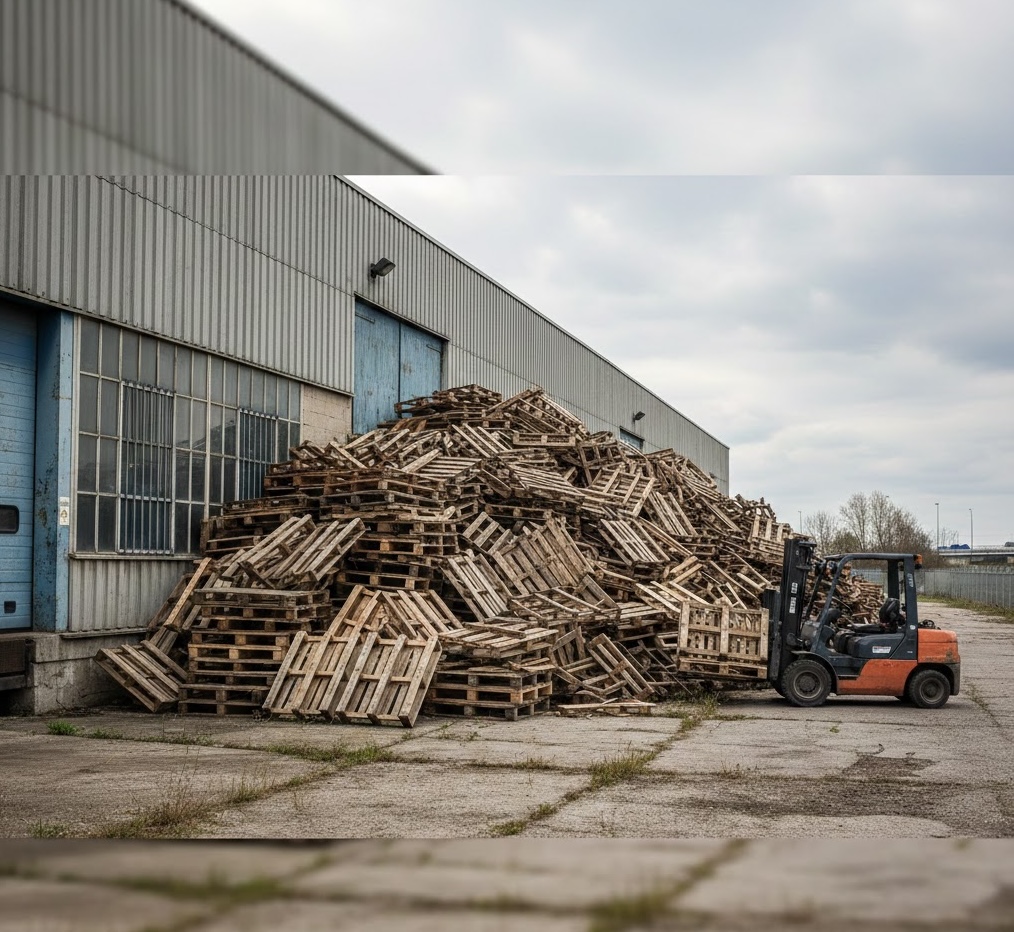
Zero Waste
Collecting & Recycling Pallets Across America
By the Numbers
Hard data on how recycling pallets with EcoPallets Pro reduces environmental impact compared to buying new pallets.
73%
Less Energy Used
Repairing a pallet uses 73% less energy than manufacturing a new one from raw lumber. That adds up to massive savings at scale.
3.5 gal
Water Saved Per Pallet
Manufacturing new pallets requires significant water resources. Each recycled pallet conserves approximately 3.5 gallons of water.
23 kg
CO₂ Offset Per Pallet
By choosing a recycled pallet over a new one, approximately 23 kilograms of carbon dioxide emissions are prevented from entering the atmosphere.
1 Tree
For Every 13 Pallets
On average, one mature tree produces enough lumber for about 13 pallets. By recycling, we dramatically reduce the demand for virgin timber.
250M
Pallets Landfilled / Year
In the US, roughly 250 million pallets are discarded annually. Our mission is to chip away at that number — one truckload at a time.
95%
Our Diversion Rate
We divert 95% of pallets we collect from landfills. The remaining 5% is recycled into mulch, wood chips, and biomass energy — nothing is truly wasted.
Beyond Recycling
Any company can collect and resell used pallets. Here is what sets EcoPallets Pro apart from the rest of the industry.
Zero-Waste Commitment
We have a strict zero-waste-to-landfill goal. Pallets that cannot be repaired are dismantled and every component — nails, wood, and all — is recycled or repurposed.
Transparent Tracking
Our pallet management programs include full lifecycle tracking so you can see exactly how many pallets were reused, recycled, and the environmental savings generated.
Local-First Operations
We prioritize local collection and distribution to minimize transportation emissions. Our regional hubs reduce the average miles each pallet travels by 40%.
Education & Advocacy
We actively educate our clients and the industry about sustainable pallet practices through resources, guides, and consultation services.
Continuous Innovation
We invest in better repair techniques, cleaner processes, and new recycling methods to push the boundaries of what sustainable pallet management looks like.
Certifications & Standards
ISPM 15 Compliant
Our heat-treated pallets meet international phytosanitary standards for export shipping.
NWPCA Member
Proud member of the National Wooden Pallet & Container Association, adhering to industry best practices.
Sustainable Forestry
We source new lumber only from certified sustainable forestry operations when virgin wood is required.
EPA Guidelines
Our recycling processes comply with all EPA guidelines for wood waste handling and disposal.
Zero Waste Certified
Working toward TRUE Zero Waste certification — currently diverting 95% of all materials from landfill.
Our 2030 Goals
The Full Environmental Picture
The pallet industry is one of the largest consumers of lumber in the United States, but it is also one of the most recyclable sectors in the entire supply chain. Understanding the environmental data behind pallet reuse and recycling helps businesses make informed, sustainable choices.
The Problem: Pallet Waste in America
The United States uses approximately 2 billion pallets at any given time, with roughly 500 million new pallets manufactured each year. Despite the pallet industry being a leader in recycling — with an estimated 80% overall recovery rate — approximately 100 to 250 million pallets still end up in landfills annually. This represents a staggering waste of wood, energy, and landfill space.
Wood pallets in landfills decompose slowly and release methane, a greenhouse gas with 80 times the warming potential of carbon dioxide over a 20-year period. The volume of pallet wood entering landfills each year accounts for roughly 10% of all wood waste in municipal solid waste streams. This is an entirely preventable problem — with the right collection, repair, and recycling infrastructure in place.
Beyond the landfill issue, the production of new pallets consumes approximately 40% of all hardwood lumber harvested in the United States. A single standard 48x40 GMA pallet requires roughly 10-12 board feet of lumber to manufacture. By extending the lifespan of existing pallets through repair and reuse, we directly reduce the demand for virgin timber and the associated environmental costs of logging, milling, and transportation.
The Solution: Circular Pallet Economics
Circular pallet economics is the principle that every pallet should be used to its maximum potential before being recycled into secondary materials. A well-maintained wood pallet can survive 15-20 trips through a supply chain before requiring repair. After repair, it can serve another 10-15 trips. Only when a pallet is structurally beyond repair should it be disassembled and its components recycled.
At EcoPallets Pro, we practice this circular model rigorously. Pallets we collect are first assessed for direct reuse. Those needing minor work enter our repair line. Those beyond repair are dismantled, and every component — boards, stringers, blocks, and even nails — is sorted for recycling. Wood components become mulch, animal bedding, biomass fuel, or raw material for engineered wood products. Metal fasteners are separated and sent to scrap metal recyclers. Nothing is wasted.
This approach creates a closed-loop system where the environmental cost of each pallet decreases with every cycle it completes. Our data shows that the average pallet in our system completes 8 full lifecycle loops before its wood is finally recycled into secondary products — far exceeding the industry average of 3-4 cycles.
Certifications & Regulatory Compliance
Sustainability without compliance is incomplete. We maintain rigorous certifications and adhere to every relevant industry standard and regulation to ensure our products and processes meet the highest bar.
ISPM 15 Heat Treatment
All pallets designated for export shipping undergo heat treatment to a core temperature of 56 degrees Celsius for a minimum of 30 minutes, in accordance with the International Standards for Phytosanitary Measures No. 15. This eliminates wood-boring insects and pathogens, ensuring compliance with international trade regulations across over 180 countries. Every treated pallet receives the official IPPC stamp.
NWPCA Membership
As a member of the National Wooden Pallet and Container Association, we adhere to the organization's best practices for pallet design, manufacturing, repair, and recycling. NWPCA membership signifies our commitment to industry standards, worker safety, and environmental responsibility. We participate in NWPCA training programs and industry research initiatives.
EPA Compliance
Our recycling and processing operations fully comply with Environmental Protection Agency regulations governing wood waste handling, stormwater management, air quality standards, and hazardous material protocols. We maintain detailed records of all waste streams and recycling outputs, and our facilities are subject to regular environmental audits to ensure ongoing compliance.
OSHA Safety Standards
Worker safety is a core pillar of our sustainability commitment. All EcoPallets Pro facilities comply with Occupational Safety and Health Administration standards for material handling, equipment operation, personal protective equipment, and workplace conditions. Our safety record is consistently above industry benchmarks, with a lost-time injury rate 40% below the sector average.
Sustainable Forestry Initiative
When we source virgin lumber for new pallet production, we exclusively purchase from suppliers certified under the Sustainable Forestry Initiative or equivalent programs like FSC and PEFC. This ensures that any new wood entering our supply chain comes from responsibly managed forests that prioritize biodiversity, water quality, and carbon sequestration.
TRUE Zero Waste Progress
We are actively working toward TRUE (Total Resource Use and Efficiency) Zero Waste certification from Green Business Certification Inc. Currently diverting 95% of all materials from landfill, we are implementing the remaining process improvements and documentation systems needed to achieve the Gold level certification by our 2030 target date.
How Pallet Recycling Benefits Your ESG
Environmental, Social, and Governance (ESG) reporting has become a critical priority for businesses of all sizes. Investors, customers, and regulators increasingly expect companies to demonstrate measurable progress on sustainability goals. Pallet recycling is one of the most tangible and easily quantifiable ways to improve your environmental scorecard.
When you partner with EcoPallets Pro, we provide detailed sustainability reports that document exactly how many pallets were recycled, how many trees were preserved, the gallons of water conserved, and the metric tons of CO2 emissions avoided. These reports are formatted for direct inclusion in your ESG disclosures, sustainability annual reports, and CDP (Carbon Disclosure Project) submissions.
Our clients have used EcoPallets Pro sustainability data to achieve higher ESG ratings from agencies like MSCI and Sustainalytics, to meet Scope 3 emissions reduction targets, and to satisfy customer-mandated sustainability requirements from major retailers and distributors. Choosing recycled pallets is not just good for the planet — it is good for your business reputation and competitive positioning.
CO2 Offset Per Pallet
23 kgEach recycled pallet prevents 23 kilograms of carbon dioxide from entering the atmosphere compared to manufacturing a new pallet from virgin lumber.
Water Conserved Per Pallet
3.5 galNew pallet manufacturing is a water-intensive process. Recycling one pallet conserves roughly 3.5 gallons of water used in lumber processing.
Energy Saved Per Pallet
73%Repairing and reusing a pallet requires 73% less energy than producing a new one — including energy for harvesting, milling, drying, and assembly.
Lumber Saved Per 13 Pallets
1 TreeOne mature tree yields enough lumber for approximately 13 standard pallets. Every 13 pallets recycled represents one tree left standing in the forest.
Methane Prevention
58 kgA single pallet decomposing in a landfill generates approximately 58 kg of methane-equivalent greenhouse gases over its decomposition lifecycle.
Beyond the Environment
True sustainability extends beyond environmental metrics. Our commitment to responsible business practices includes creating quality jobs, supporting local communities, and building an inclusive workplace that reflects the diversity of the communities we serve.
Job Creation
The pallet recycling industry supports thousands of jobs across the United States. EcoPallets Pro directly employs over 150 team members across our facilities and has created an additional estimated 300 indirect jobs through our supplier and carrier network. These are stable, well-paying positions in communities that need them most.
Workforce Development
We invest in our team through ongoing training programs in pallet repair techniques, equipment operation, safety protocols, and leadership development. Many of our facility managers and regional coordinators started in entry-level roles and advanced through our internal promotion pipeline. We believe in growing talent from within.
Community Partnerships
We partner with local nonprofits, vocational training programs, and community colleges to provide job training and employment pathways for underserved populations. Our Community Pallet Program donates refurbished pallets to local community gardens, nonprofit organizations, and school woodworking programs.
See Your Eco Impact
Every pallet recycled is a step toward a greener future. Use our interactive calculator to see exactly how many trees, gallons of water, and tons of CO2 your business can save by choosing recycled pallets.
Whether you recycle 100 pallets or 10,000, the impact is real and measurable. Share your results with stakeholders to demonstrate your company's commitment to sustainability.
Eco Impact Calculator
See how recycling pallets saves the planet. Drag the slider to calculate your impact.
38
11.5 tons
1,750 gal
15,000 lbs
Join the Green Movement
Partner with EcoPallets Pro and make your supply chain more sustainable. Every pallet counts — let us help you make a difference.